

Use of AutoCAD in the Design and Technical Development of Social Interest Housing in Guayaquil, Ecuador
Article Sidebar
Main Article Content
Abstract
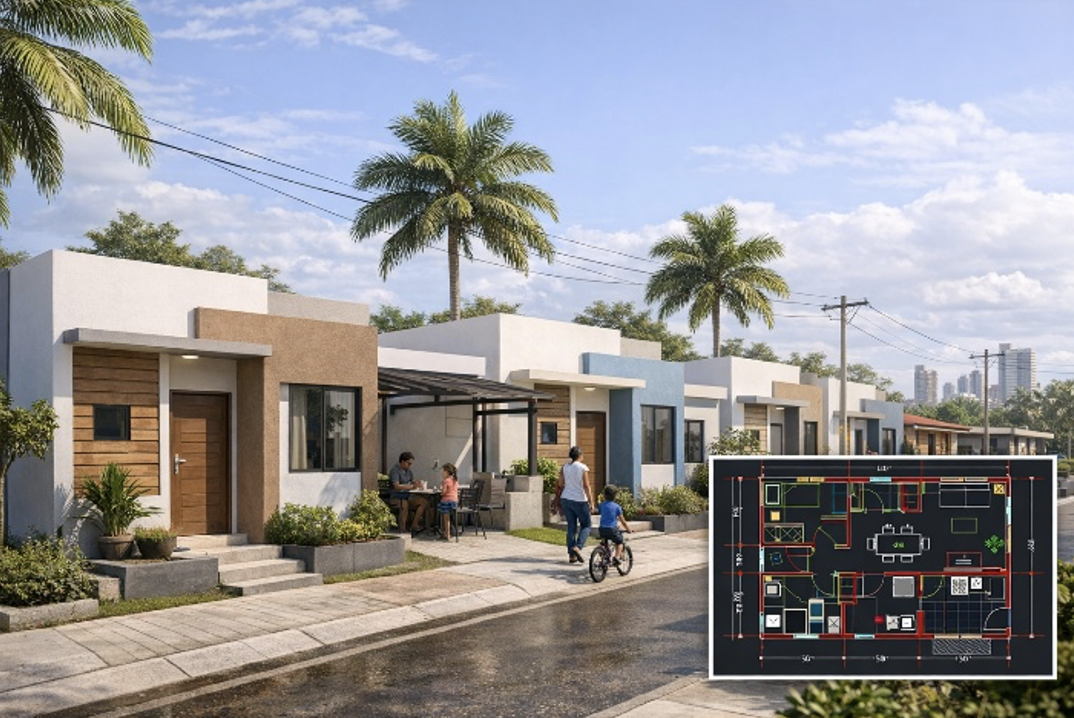
Social interest housing (SIH) is a priority within urban development policies in Ecuador, particularly in Guayaquil, a city facing rapid population growth, high urban density, and budgetary constraints that limit access to adequate housing. In this context, computer-aided design (CAD) tools have become strategic instruments for optimizing architectural planning and construction documentation in socially oriented housing projects. This paper analyzes the use of AutoCAD as a technical drafting and planning tool in the design of social interest housing in Guayaquil. A qualitative–comparative approach was adopted, focusing on AutoCAD’s contribution to precision in architectural layouts, plan standardization, technical coordination, and compliance with local regulations. The methodology involved the development of social housing prototypes with built areas between 45 and 60 m², integrating variables such as spatial distribution, cross-ventilation, orientation, and municipal requirements. The results show that AutoCAD enables accurate representation of reduced spaces, facilitates the reuse of standardized elements, and supports reliable area and quantity measurements. Although AutoCAD does not natively include advanced parametric capabilities, its accessibility, low hardware requirements, and compatibility with institutional approval processes make it a widely used tool in social housing projects. The study concludes that AutoCAD remains a fundamental resource for the technical development of social interest housing in Guayaquil, particularly in contexts with limited economic and technological resources.
Downloads
Article Details

This work is licensed under a Creative Commons Attribution-NonCommercial-ShareAlike 4.0 International License.